Pipe Relining Costs in Canberra
Pipe Relining Costs in Canberra: What Homeowners Should Expect
How much does pipe relining actually cost?
It's the first question every Canberra homeowner asks. And fair enough. Nobody wants a nasty surprise when the invoice arrives.
Here's the straight answer: most residential pipe relining projects in Canberra cost between $3,000 and $15,000 in total. That's typically 30-50% less than digging up and replacing your pipes the traditional way.
Let's break down exactly what you're paying for.
The basic pricing structure
Pipe relining in the ACT follows a tiered structure based on pipe diameter, length, and how easy it is to access.
For standard 100mm residential pipes, expect to pay $400 to $700 per metre. Larger 150mm drains run approximately $550 or more per metre. Complex jobs with difficult access can reach $800 to $1,000 or more per metre.
Most Canberra providers use a first-metre-plus-additional pricing model. You'll pay an initial fee of approximately $2,400 that covers setup, inspection, cleaning, and the first metre. Each additional metre adds $650 to $850.
Here's what typical jobs cost:
A patch repair starts at $2,000 to $3,000. A 2-metre segment runs around $3,000. A 10-metre section costs $6,000 to $8,000. Large or complex projects can reach $10,000 to $15,000.
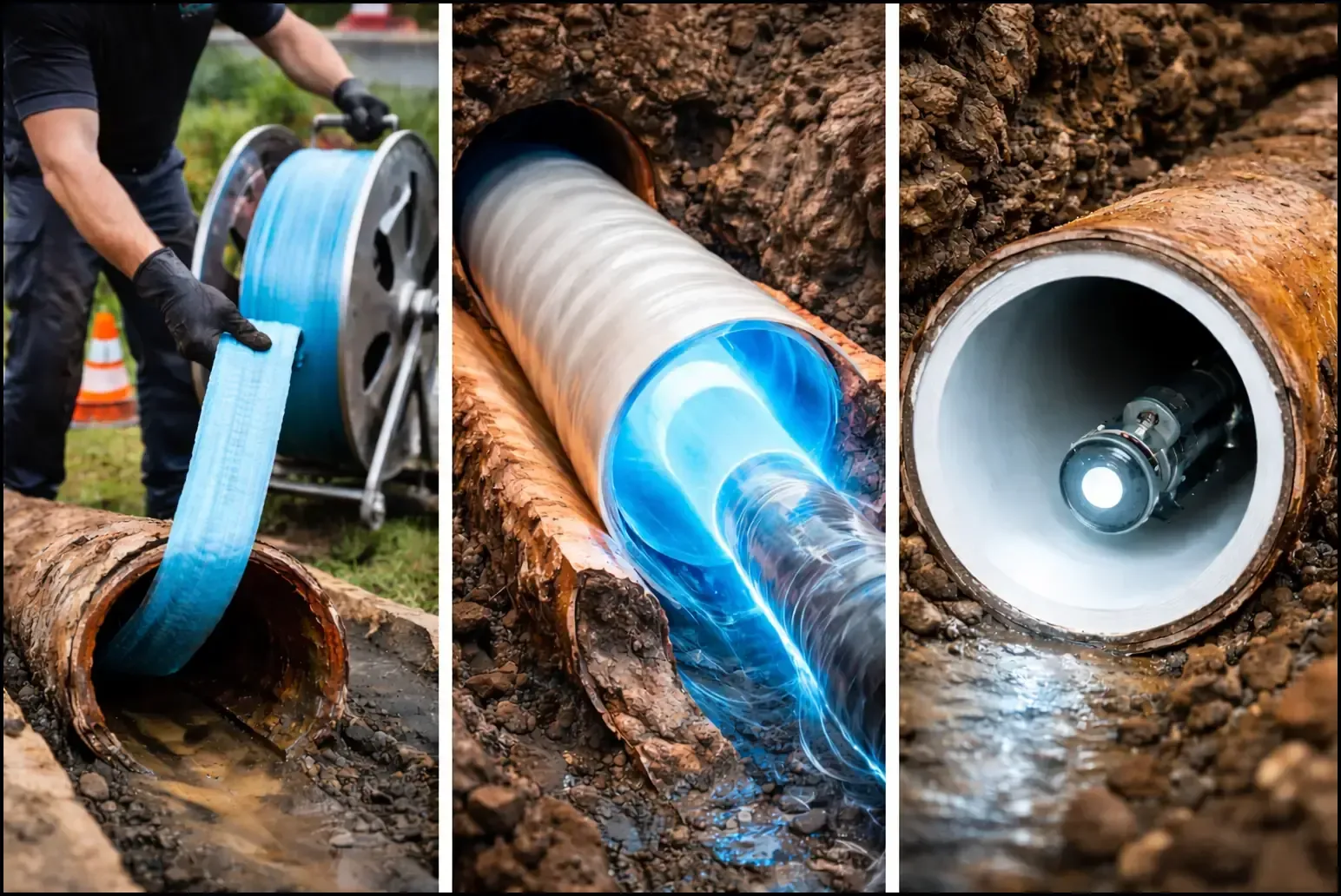
The minimum job cost across Canberra sits around $2,000 to $3,000 regardless of repair size. This highlights the major equipment needed for CCTV inspection, hydro-jetting, and preparing liners.
Why there's a minimum cost
You might wonder why a small repair still costs a couple of thousand dollars.
It comes down to equipment.
Every relining job needs:
- A CCTV camera inspection.
- High-pressure cleaning gear.
- Specialised liner materials.
- Curing equipment.
These tools are essential for a successful project.
That setup takes time and expertise whether you're fixing one metre or twenty.
Think of it like calling out a mechanic. There's a baseline cost just to get the right gear on site and properly diagnose the problem.
Junction costs add up
Here's something that catches homeowners off guard: junction reinstatements.
Where branch lines reconnect to your main pipe, each junction needs to be cut back open after relining. This adds $2,000 to $4,500 per junction.
If your main sewer line connects to several bathrooms and kitchens, junction costs add up. They can be a big part of your total bill. Make sure any quote you receive specifies how many junctions are involved and what they'll cost.
Relining vs replacement: the real comparison
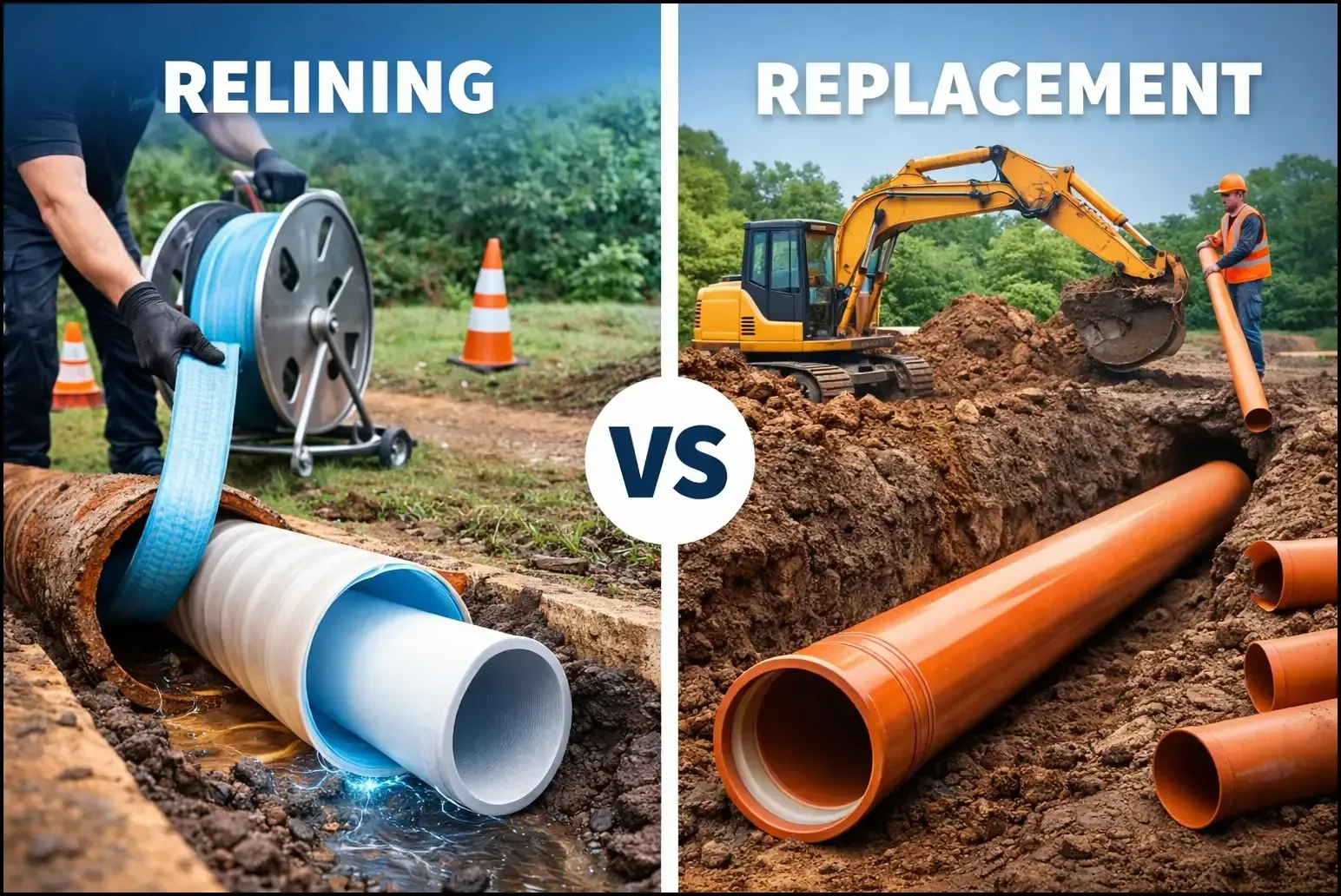
Traditional pipe replacement typically costs $15,000 to $25,000 or more. But that headline number doesn't tell the whole story.
Replacement means excavation. That means digging up your yard, possibly your driveway, and definitely your garden beds. Then you need to factor in landscaping restoration, driveway repairs, and extended labour.
Relining works best if your pipes are under driveways, buildings, concrete slabs, or established landscaping. In those situations, the excavation and restoration costs alone can exceed the entire relining bill.
Most residential relining jobs finish in one day. The pipes work again within hours after the liner cures. Try saying that about a dig-and-replace job.
What can (and can't) be relined
Relining works on various pipe materials, including:
- Clay
- Terracotta
- Cast iron
- Concrete
- Galvanised steel
- Copper
- Fibreglass
That covers most of what you'll find in Canberra homes.
The technology effectively deals with cracked pipes, tree root intrusion, corroded interiors, displaced joints, and moderate leaks.
But relining isn't right for every situation.
Pipes must measure at least 40 to 50mm in diameter. Completely collapsed pipes can't be relined because there's no structure for the liner to adhere to. Severe sags or bellies are problematic. Relining shapes to the existing form, so it doesn't fix grade issues.
Pipes that are extremely brittle and can't withstand hydro-jet cleaning also need traditional replacement.
Warranties have improved significantly
The good news on warranties: the Australian pipe relining market now offers guarantees ranging from 25 to 60 years. Premium providers offer 50-year guarantees backed by free annual CCTV inspections.
Quality epoxy-lined pipes have a life expectancy of 50 to 100 years. Some providers claim relined pipes are up to four times stronger than new PVC.
Products must have WaterMark certification to be legally installed in Australia. Specifically, look for WMTS-518 certification for CIPP liners. Non-compliant products void both warranties and potentially your home insurance coverage.
Warranties usually cover defects in materials and workmanship. They also include liner leaks, detachment, and blockages from installation errors. They usually do not cover damage from outside factors. This includes tree roots in unlined areas, ground movement, or work done by other plumbers.
How to spot a dodgy quote
Not all quotes are created equal. Here's what to watch for.
A professional quote should include:
- Scope of work
- CCTV inspection findings
- Per-metre pricing breakdown
- Setup charges
- Specified materials and technology
- Labour costs
- Junction reinstatement costs
- Cleaning preparation
- Warranty terms
- Estimated completion timeframe
The quote must include the provider's ACT plumber licence number and ABN. You can verify both through Access Canberra's public register and the Australian Business Register.
Which Canberra homes face the highest costs?
Your suburb and pipe age affect what you'll pay.
Highest-risk areas are the Inner North (Reid, Braddon, Ainslie, Turner, O'Connor) and Inner South (Kingston, Manuka, Barton, Forrest). These neighborhoods have housing from the 1920s to the 1950s. Pipes in these areas could be 70 to 100 years old or more.
Moderate-risk areas are Woden Valley, Belconnen, and Weston Creek. These suburbs were developed in the 1960s and 1970s.
Lower-risk areas are Tuggeranong (built in the 1980s), Gungahlin, and Molonglo Valley (from the 1990s to now). These places mainly use modern PVC and HDPE pipes.
Older clay and terracotta pipes have many joints. This makes them more prone to root intrusion and damage from ground movement. More damage generally means more metres of relining required.
Red flags to watch for
Abnormally cheap quotes suggesting inferior materials or corner-cutting. If someone quotes well below $2,000 for any job, ask hard questions about what you're actually getting.
Quotes that omit junction patches. Without these, tree roots will regain access to your pipes.
Full payment demanded upfront rather than staged payments.
Cash-only requests indicating tax avoidance.
No WaterMark certification evidence.
Inability to provide licence numbers.
Resistance to conducting CCTV inspection before quoting.
The bottom line
Pipe relining costs Canberra homeowners $3,000 to $15,000 for most residential projects. That's usually 30-50% cheaper than traditional replacement. This includes excavation and restoration costs.
The minimum investment of $2,000 to $3,000 reflects genuine equipment and expertise requirements. Quotes much lower than this need a careful look at materials, warranty terms, and licensing credentials.
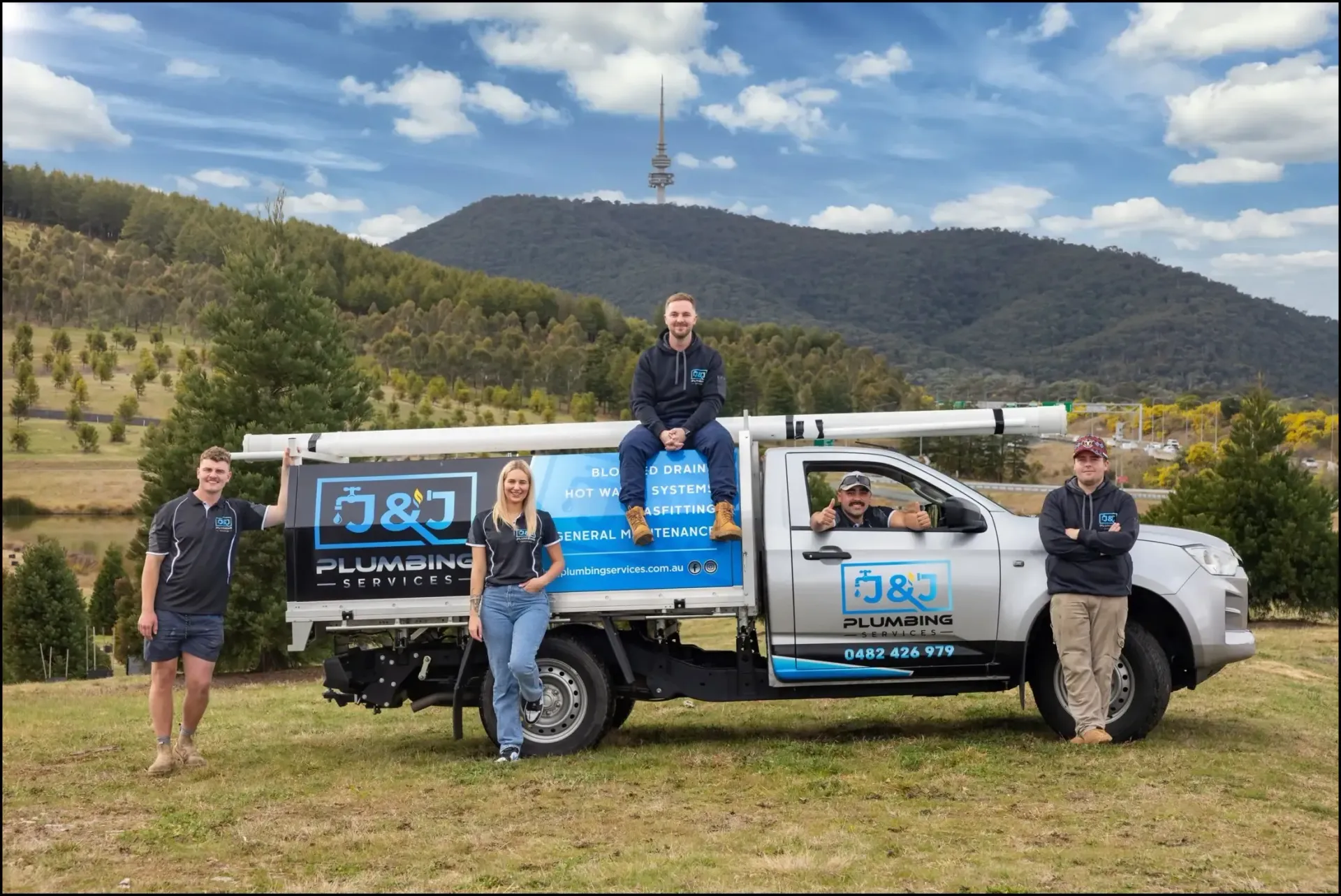
J&J Plumbing Services provides upfront, itemised quotes with no hidden costs. We use CCTV inspection to find your pipe issues accurately. Then, we can suggest the best repair method.
Frequently Asked Questions
How much does pipe relining cost in Canberra?
Most residential jobs cost between $3,000 and $15,000, depending on pipe length, diameter, access, and the number of junctions involved.
Why is there a minimum cost for small relining jobs?
Even short repairs need CCTV cameras, high-pressure jetting, liners, and curing equipment, so setup costs apply regardless of pipe length.
Is pipe relining cheaper than replacing pipes?
Usually, yes. When excavation, concrete cutting, and landscaping repairs are included, relining is often 30–50% cheaper.
What affects the final relining price the most?
Pipe length, pipe diameter, access difficulty, and the number of junctions that need reinstating have the biggest impact.
What are junction reinstatement costs?
Each junction reconnecting to the main pipe must be reopened after relining, typically costing $2,000 to $4,500 per junction.
Can all pipes be relined?
No. Collapsed pipes, severe sags, very small pipes, or extremely brittle materials usually need replacement.
How long does pipe relining last?
Quality relining systems typically last 50 years or more, with warranties ranging from 25 to 60 years.