Pipe Relining in Canberra: What Works and What Doesn't
Pipe Relining in Canberra: How It Works and When It's Better Than Replacement
Tree roots are wrecking Canberra's pipes.
Icon Water reported 55.72 sewer breaks per 100km in 2024-25. That's nearly double the national average of 28.5. Over 1,900 sewer main breaks and chokes happened that year alone, up from 1,350 the previous year.
If you own an older Canberra home, your pipes are under attack. The good news? You might not need to dig up your entire yard to fix them.
What is pipe relining?
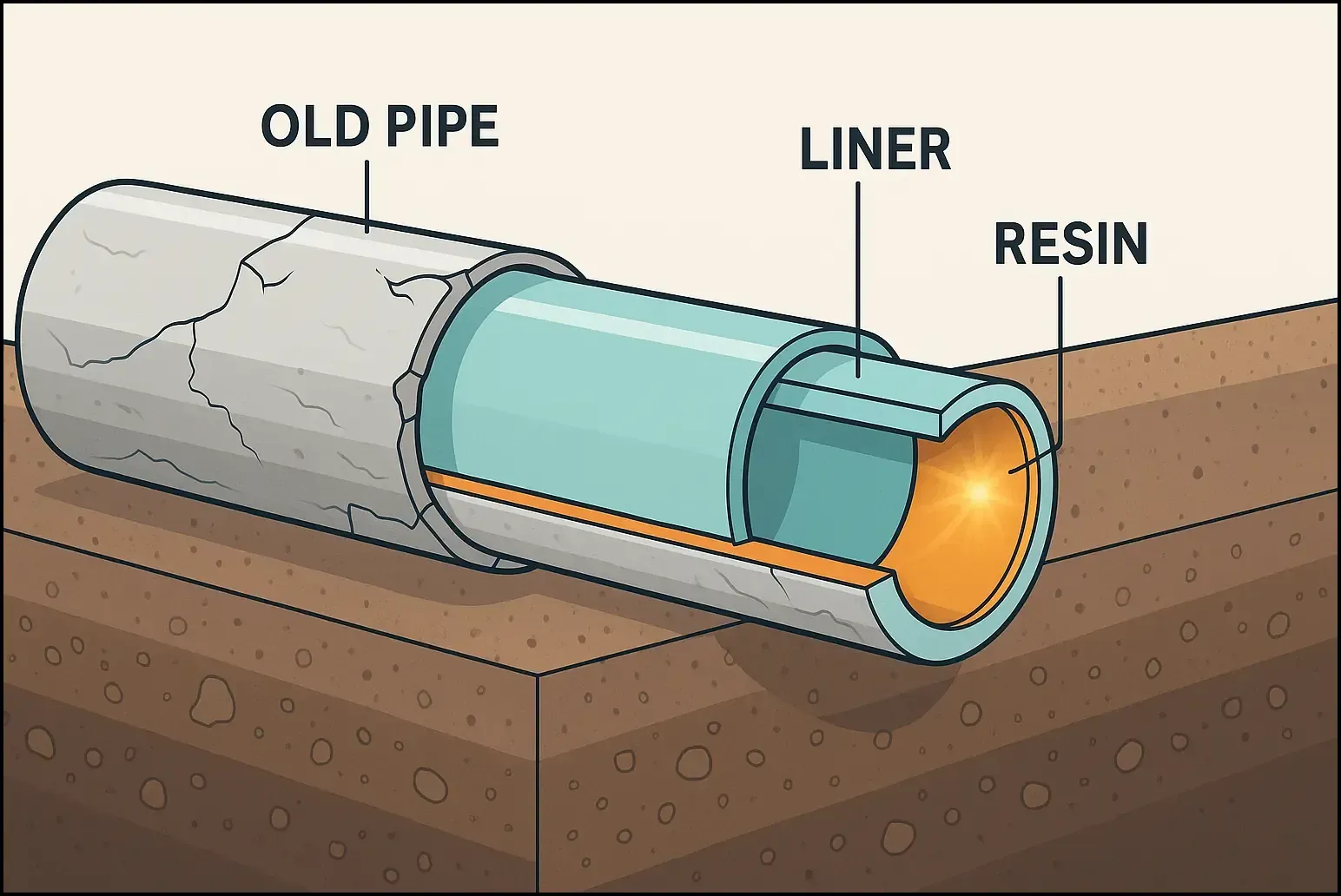
Pipe relining creates a new pipe inside your existing damaged one. Think of it as a pipe within a pipe. Plumbers use a resin-coated liner instead of digging trenches. This liner hardens and creates a new wall inside the old pipe.
No excavation. No destroyed gardens. No ripped-up driveways.
For typical residential jobs in Canberra,
relining costs between $2,500 and $5,000. That's often 30-50% lower than traditional dig-and-replace methods when you look at total costs.
Why Canberra is tough on pipes
Canberra's conditions are particularly harsh for underground pipes.
Our soil is primarily moderately reactive clay that shrinks when it's dry and swells when it's wet. Add temperature extremes of -8°C to 45°C, plus annual rainfall of 635mm. This creates a constant shrink-swell cycle that damages thousands of homes each year.
This ground movement stretches pipes, bends them, breaks them, and causes joints to separate. It creates 'bellies' where waste accumulates and forms blockages.
Then there's the trees.
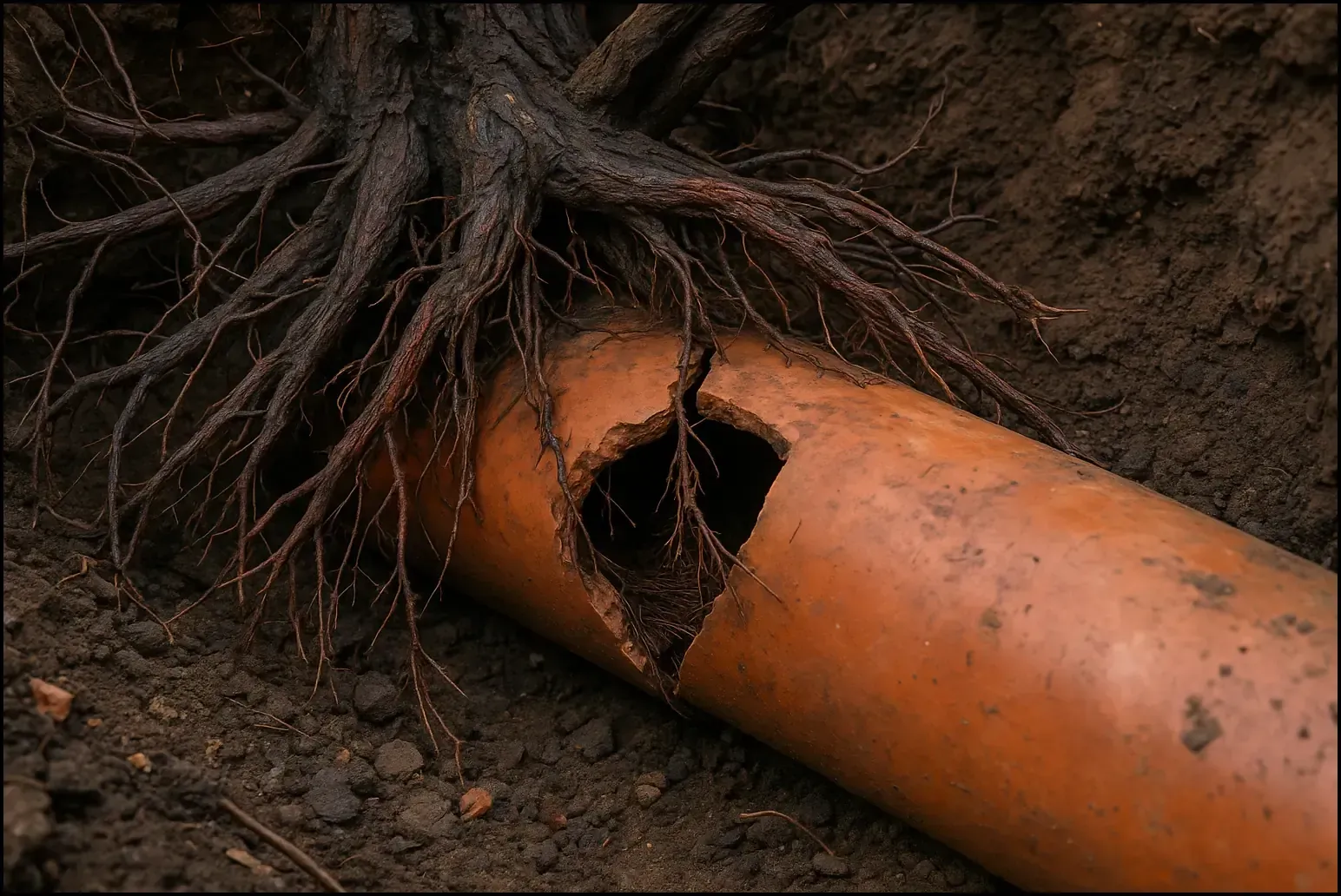
Tree root intrusion is the primary cause of pipe problems in the ACT. Eucalyptus roots can travel up to 30 metres seeking water. Poplars, willows, jacarandas, large figs, camphor laurels, and liquidambars often cause issues.
Canberra's dry winters and autumns make roots aggressively hunt for water sources in sewer pipes. Older clay systems with multiple joints give them plenty of entry points.
Which Canberra homes are most at risk?
Homes built before 1970 typically have clay pipes. These are the most vulnerable.
Inner Canberra suburbs like Reid, Braddon, Barton, Forrest, Griffith, Kingston, Ainslie, and Yarralumla, have the oldest pipes. They also show the highest vulnerability. These areas were built between the 1920s and 1950s. They usually feature clay drains in 1200mm sections, joined with rubber rings. Every joint is a potential entry point for roots.
Post-war 'Govie' suburbs such as Turner, O'Connor, Lyneham, Dickson, and Downer have a mix of late clay pipes and early plastic ones. Many of these houses were built fast on reactive clay. They didn't consider proper foundations, which caused pipe damage from settlement.
Homes built from the 1980s onwards generally have PVC or HDPE pipes with fewer issues.
How the relining process works
The process uses a consistent method that meets AS/NZS 3500, Australia's plumbing and drainage standard.
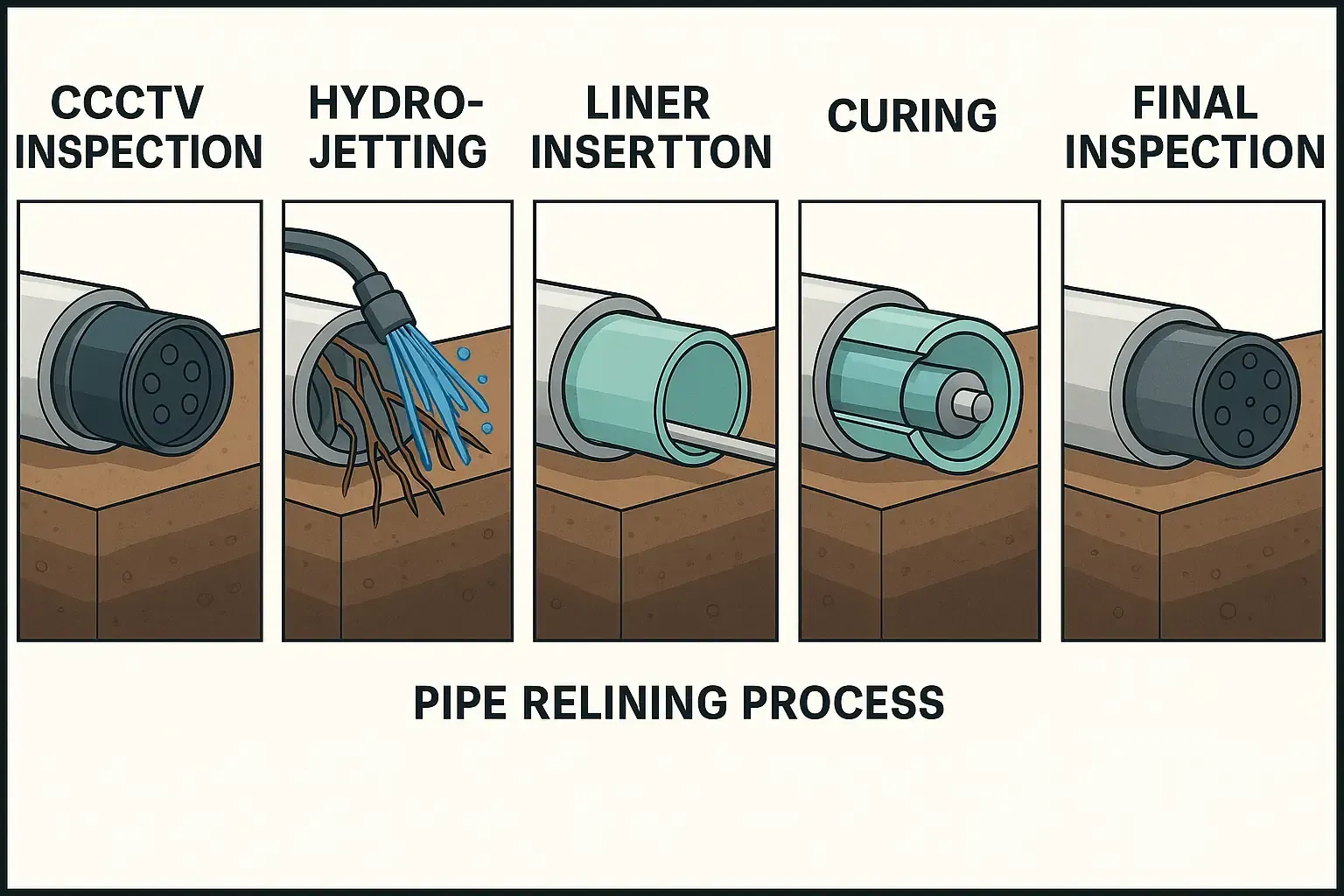
Step one: Camera inspection. A CCTV drain camera goes into your pipes. It checks for damage, finds root intrusions, spots cracks, and sees if relining can work.
Step two: Cleaning. High-pressure hydro-jetting and robotic cutters remove roots, grease, scale, and debris. This preparation is critical. The resin needs thoroughly clean pipe walls to bond properly.
Step three: Liner installation. Technicians saturate a felt, polyester, or fibreglass liner with two-part epoxy resin. Using compressed air, they invert the liner through the pipe, pressing it against the existing walls.
Step four: Curing. The liner hardens through UV light (10-20 minutes), hot water or steam (2-5 hours), or ambient curing (8-12 hours).
Step five: Final inspection. Another camera check confirms the repair is complete and defect-free. Any junctions covered during installation get reopened with robotic cutters.
Modern relining systems, such as Brawoliner, can handle 90-degree bends and multiple junctions using just one liner. This makes complex pipe runs much easier to fix without excavation.
When relining beats replacement
Under concrete or buildings. This is where relining really shines. Excavating beneath driveways, slabs, or buildings can cost $20,000 to $50,000 or more including restoration. Relining the same pipes might cost $5,000 to $10,000. Canberra's reactive clay makes under-house excavation particularly risky for foundations.
Near established landscaping. Relining avoids destroying mature plants, lawns, and retaining walls. Landscaping restoration alone can cost $50 to $1,000 or more per square metre depending on finish.
Heritage properties. The ACT has 10 heritage precincts. Suburbs like Reid, Braddon, and Griffith contain significant heritage housing. Under the Heritage Act 2004, you may need approval from the ACT Heritage Council for excavations in these areas. Applications can take up to 120 working days to process.
Relining avoids triggering these requirements entirely. Case studies show heritage relining completed at 40% of the lowest excavation quote.
Complex pipe runs. Modern relining systems can tackle 90-degree bends and multiple junctions using just one liner. Traditional replacement would need extensive excavation to access the same areas.
When replacement is necessary
Relining isn't suitable for every situation.
Collapsed pipes cannot be relined because the liner needs the existing pipe structure for support.
Severely bellied pipes present another limitation. Relining conforms to the existing shape, so water will still pool in sagging sections.
Pipes under 40-50mm diameter are too small for relining. The process reduces internal diameter by approximately 6mm. Australian standards set a minimum of 100mm for residential sewer lines. This usually doesn't impact main drains, but it might exclude some smaller branch pipes.
Severely corroded or brittle pipes that can't handle high-pressure cleaning need to be replaced. When damage exceeds roughly 80% of the pipe structure, replacement becomes the only option.
What does it cost?
Here's what Canberra homeowners typically pay for relining:
Standard residential jobs run $2,500 to $5,000. Per-metre rates range from $400 to $800 for standard work and $800 to $1,200 or more for complex jobs. Patch repairs for localised damage of 1-3 metres cost $2,000 to $3,000. Junction relining runs $2,000 to $4,500 per junction.
Longer runs reduce the per-metre cost because setup expenses stay fixed. A 1-metre repair might cost $3,000 total, while 40 metres costs approximately $20,500.
Compare that to full sewer line replacement at $15,000 to $25,000 or more. Adding concrete cutting, landscaping remediation, and possibly bathroom rebuilding can raise costs. Often, these total costs are 30-50% higher than relining.
Warranties and lifespan
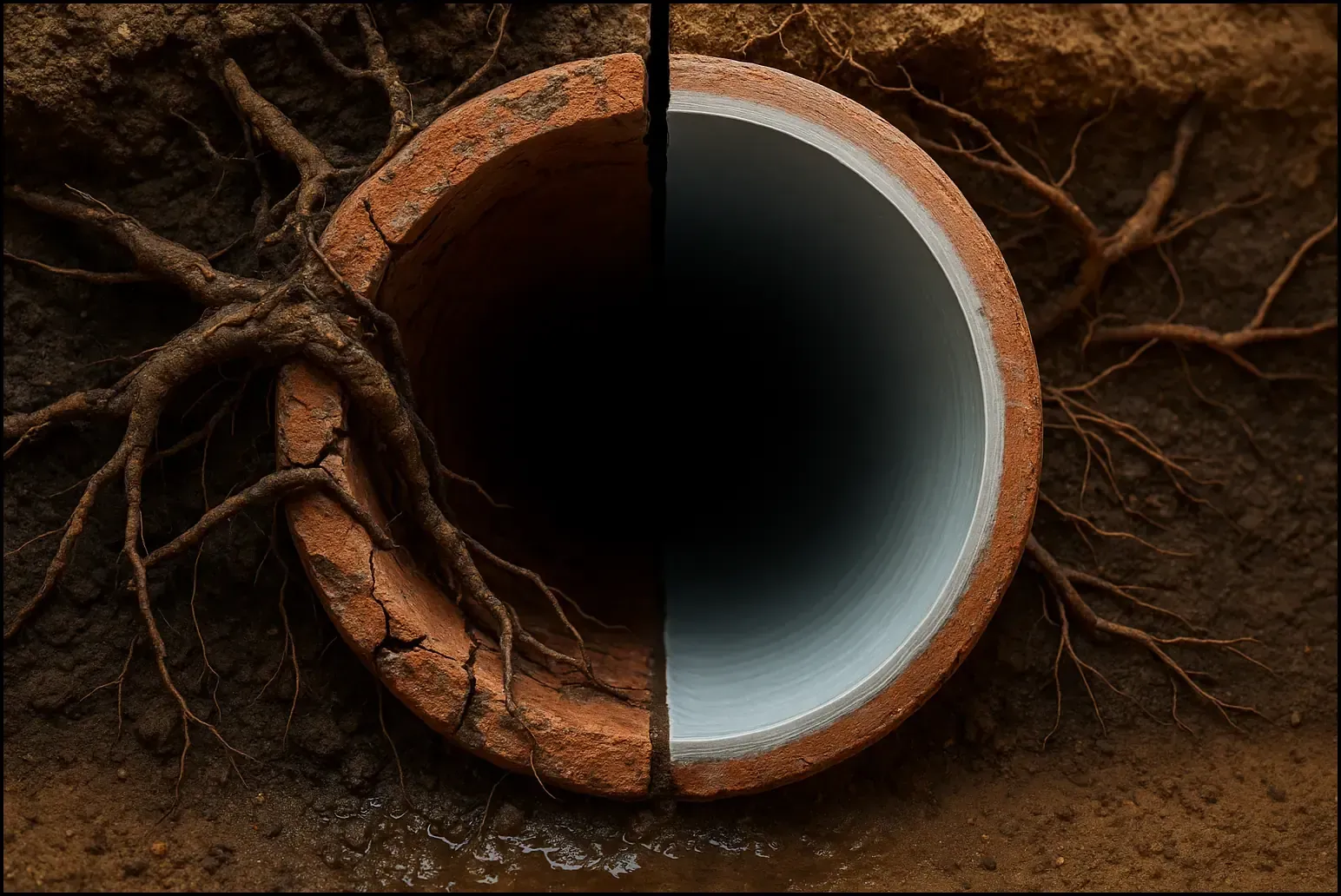
Quality relining providers offer warranties of 25 to 50 years. Relined pipes typically last 50 years or more, with many providers citing 50-100 year life expectancy.
That actually exceeds traditional clay pipes (50-60 years) and cast iron (40-75 years).
All relining work must comply with AS/NZS 3500 and use Watermark-certified products. Always verify your plumber is licensed through Access Canberra.
Start with a camera inspection
Before committing to any repair approach, get a CCTV inspection. Many Canberra providers offer this free with a relining quote.
For properties with clay pipes near 50 years old, think about relining the whole system if one part fails. Don't wait for more failures to happen.
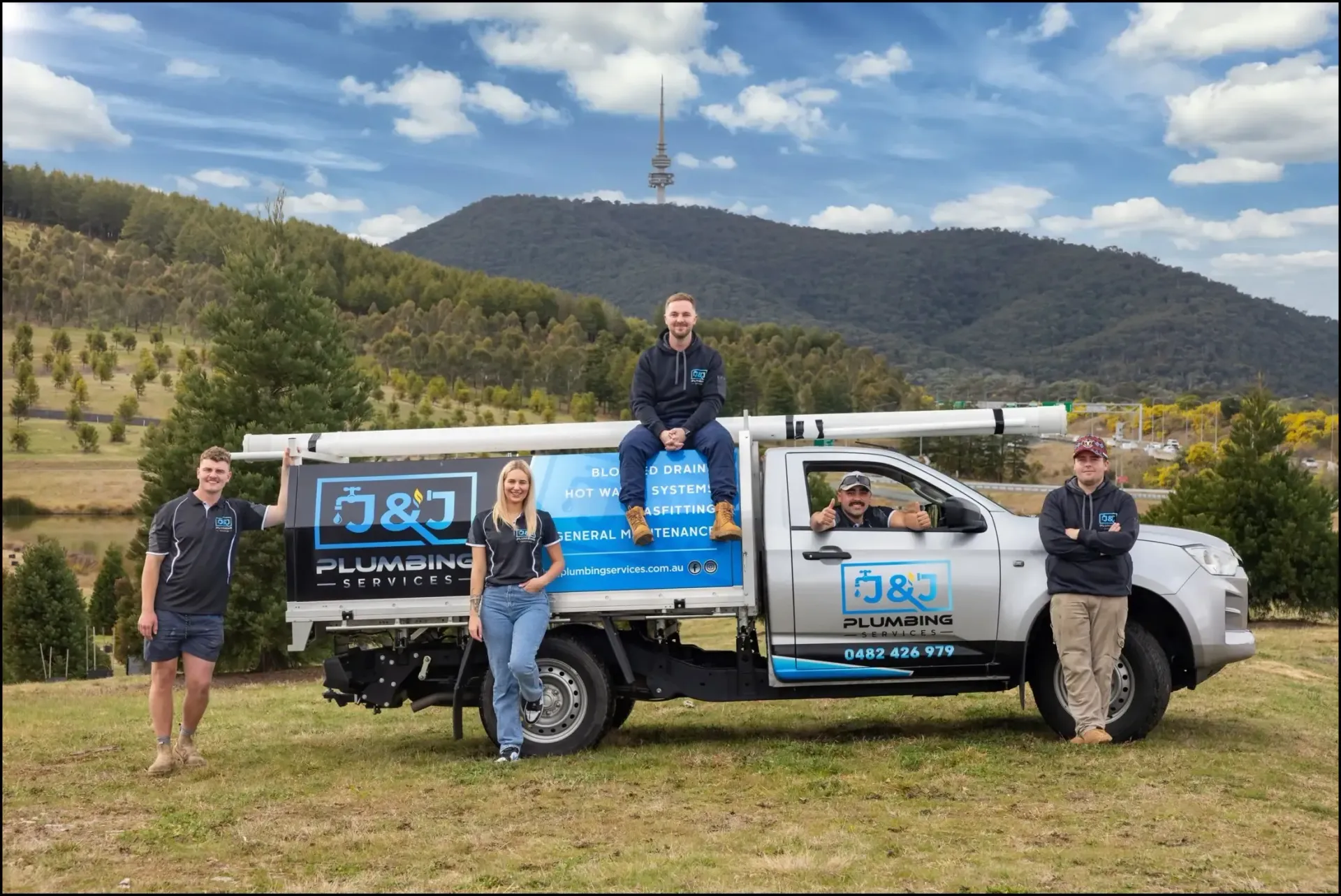
J&J Plumbing Services uses CCTV and high-pressure jetting. They diagnose and clear stubborn blockages in Canberra and nearby areas. If your older home is showing signs of pipe problems, getting a professional assessment is the smart first step
Frequently asked questions
What is pipe relining, in simple terms?
Pipe relining creates a new pipe inside your damaged one, without digging. It seals cracks, blocks roots, and restores flow.
Is pipe relining suitable for older Canberra homes?
Yes. Homes built before the 1970s with clay pipes are often ideal candidates, provided the pipe has not collapsed.
How long does pipe relining last?
Most relined pipes last 50 years or more. Many providers offer warranties of 25 to 50 years.
Will pipe relining stop tree roots coming back?
Yes. Relining seals all joints and cracks, which removes entry points for roots.
Do you need to dig up my yard or driveway?
In most cases, no. Relining is done through existing access points like inspection openings.
How long does the relining process take?
Most residential jobs are completed within one day, depending on pipe length and curing method.
Is pipe relining cheaper than replacing pipes?
Often, yes. When you factor in excavation, concrete cutting, and landscaping repairs, relining is usually 30 to 50 percent cheaper.
Can every damaged pipe be relined?
No. Collapsed pipes, severely sagging pipes, or pipes with extreme structural damage usually need replacement.
Will relining reduce water flow?
Only slightly. The internal diameter reduces by about 6mm, which does not affect normal household drainage.
Is pipe relining approved under Australian standards?
Yes. Professional relining must comply with AS/NZS 3500 and use Watermark-certified materials.
How do I know if relining is right for my property?
A CCTV camera inspection is the first step. It shows the pipe condition and confirms whether relining is suitable.
Is pipe relining safe for heritage homes in Canberra?
Yes. Relining avoids excavation, which helps heritage homeowners sidestep approval delays and structural risks.