7 Warning Signs Your Hot Water System Is About to Fail
Table of Contents:
1. Water pooling around the base
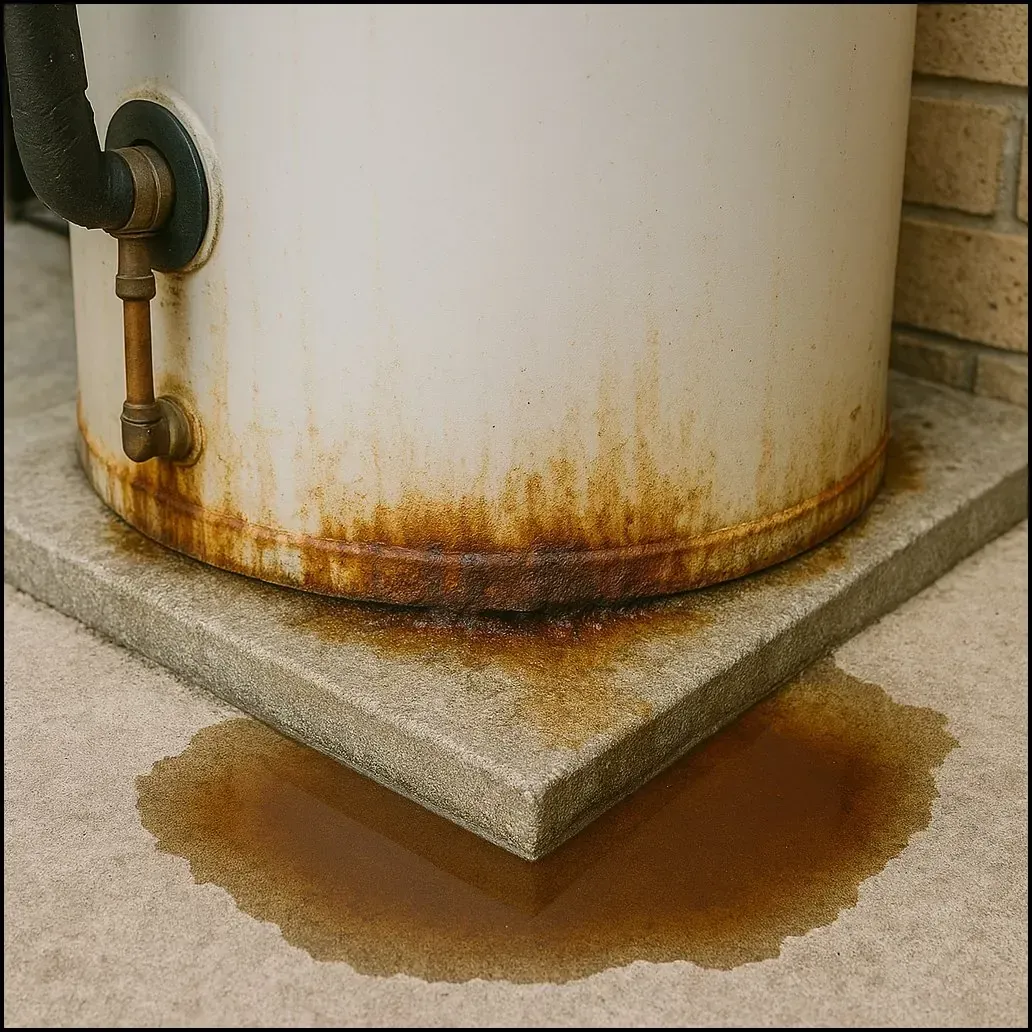
This one's serious. Water collecting around your hot water unit means tank failure or a major leak. It's not a 'deal with it next month' situation.
If you've got an electric storage system, pooling water creates a real electrocution risk. Don't touch the tank if the floor beneath it is wet. Switch off power at the switchboard first, then call a licensed plumber.
For any system type, puddles at the base usually mean replacement rather than repair. Tanks leaking from the body itself always need full replacement.
2. Rusty or discoloured hot water
Brown or rust-coloured water from your hot taps signals internal corrosion. Your tank is rusting from the inside out.
This ties back to something most homeowners never think about: the sacrificial anode rod. This metal rod sits inside your tank and corrodes on purpose, protecting the steel tank from rust. Once it's depleted (typically after 3-5 years), the tank itself starts corroding.
A rotten egg smell from your hot water (but not cold) often indicates anode failure and bacterial growth. Replacing this component can extend tank life by 5-15 years. It's one of the smartest maintenance investments you can make.
3. Strange noises from the unit
Hot water systems should run quietly. When they start making noise, something's up.
Popping, crackling, or rumbling sounds from storage tanks mean there's sediment buildup at the bottom. Minerals from your water supply have accumulated and hardened. When water gets trapped under sediment and heats up fast, it makes these unique sounds.
For heat pump systems, listen for changes to the normal hum. Grinding sounds indicate bearing failure needing immediate attention. Clicking suggests electrical relay problems. Loud vibrating points to loose components or a struggling compressor. Any change from your unit's normal sound warrants a look.
4. Running out of hot water faster than usual
This is often the first thing homeowners notice with electric storage systems. You're getting less hot water than you used to, or water that's lukewarm instead of hot.
The main issues are often sediment buildup, which cuts tank capacity, or a faulty heating element. In dual-element systems, if the upper element fails, the water turns lukewarm. But if the lower element fails, there's no hot water at all.
For solar hot water systems, the test is whether you're getting adequate hot water on sunny days. A good system should give you lots of hot water and use the booster sparingly. Usually, it only needs 6-12 activations per year. If your system depends on the booster even in good weather, the solar collector may have failed.
5. Rising energy bills
Your hot water system chews through a fair chunk of household energy. When efficiency drops, your bills climb.
This shows up particularly clearly with heat pumps. These systems have a backup electric element for high-demand times. However, this element uses 3-4 times more electricity than when in heat pump mode. Rising electricity bills usually mean the system is using backup power because of a component failure.
An efficient heat pump should cost approximately $150-$250 annually for a family of four. Costs approaching $500-$600 suggest serious efficiency problems.
Here in Canberra, heat pumps need cold-climate-rated models to maintain efficiency. Budget units might face challenges in our winter. They depend a lot on backup elements, which can reduce efficiency benefits.
For continuous flow systems, heat exchanger scaling reduces efficiency by up to 12% even with thin buildup. Symptoms include lukewarm water on high-temperature settings, reduced flow rate, and increasing energy bills.
6. Pilot light problems (gas systems)
Got a gas storage or gas continuous flow system? The pilot light tells you plenty about system health.
A pilot that won't stay lit usually indicates a faulty thermocouple (the safety device that senses the flame and allows gas flow). Relighting the pilot repeatedly signals imminent thermocouple failure.
More concerning is pilot flame colour. A healthy pilot burns blue. Yellow or orange flames indicate incomplete combustion and potential carbon monoxide production.
Carbon monoxide is the most serious safety risk with gas hot water systems. It's colourless and odourless. It kills about 5 Australians each year, while many others suffer non-fatal poisoning.
Warning signs include:
- Flu-like symptoms that get better when you leave home
- Soot or brown/yellow stains around the appliance
- Excessive condensation on windows when the unit runs
If you smell gas, which has a rotten egg smell, leave the building right away. Then, call emergency services from outside.
7. Error codes on continuous flow systems
Continuous flow units from brands like Rinnai, Rheem, Dux, and Bosch display specific fault codes when something goes wrong. Unlike storage systems that fail gradually, these units often tell you exactly what's happening.
Common codes are:
Rinnai: Error 11 (no ignition)
Rheem: Error 12 (flame failure during operation)
Bosch: EA (ignition fault)
These usually indicate gas supply issues, faulty igniters, or blocked burners.
Recording these codes before calling a plumber saves diagnostic time.
When to act
When multiple warning signs appear together, replacement becomes more urgent than repair.
The general rule is to think about replacement if:
- Repair costs go over 40-50% of a new system's price
- Your system is over 10-12 years old and has ongoing problems
- You see multiple component failures in a year
Canberra homeowners with solar hot water should also note that our region falls within frost-prone zones. Signs of freeze damage are cracked manifolds, split risers, and sudden pressure loss. You might notice this as water damage on the ceiling after a cold night.
The best approach is prevention. Flush your tank annually. Check the anode rod regularly. Get professional service every two years for gas and heat pump systems. This can spot issues early and help your system last longer.
Frequently Asked Questions
How long do hot water systems usually last?
Most hot water systems last 8 to 12 years. With good maintenance, some can last longer, but once issues start stacking up, replacement is often the smarter move.
Is water pooling around the base always serious?
Yes. Water around the base usually means a tank failure or major internal leak. In most cases, this points to replacement rather than repair.
Is rusty or brown hot water dangerous?
It's not usually harmful to your health, but it's a clear sign of internal corrosion. Once rust appears, the tank is already failing.
What causes the rotten egg smell in hot water?
That smell often comes from a depleted anode rod and bacterial activity inside the tank. Replacing the anode can extend the life of the system if caught early.
Are strange noises from my hot water system normal?
No. Popping, rumbling, or crackling usually means sediment buildup. Grinding or vibrating noises in heat pumps can signal mechanical failure.
Why am I running out of hot water faster than before?
Common causes include sediment reducing tank capacity, failed heating elements, or solar collectors not working properly.
Can a hot water system increase my energy bills?
Absolutely. When systems lose efficiency, they work harder and use more energy. Heat pumps running on backup elements are a common culprit.
How can I tell if my gas hot water system is unsafe?
Watch for pilot lights that won't stay lit, yellow or orange flames, soot marks, or flu-like symptoms at home. These can signal carbon monoxide risks and need urgent attention.
What should I do if my continuous flow system shows an error code?
Write the code down and call a licensed plumber. Error codes often point directly to ignition, gas supply, or burner issues and speed up diagnosis.
When should I repair versus replace my hot water system?
Consider replacement if:
- Repairs cost more than 40–50% of a new system
- The system is over 10–12 years old
- Multiple components fail within a year
Are hot water systems in Canberra affected by frost?
Yes. Canberra is a frost-prone region, and solar systems can suffer freeze damage like cracked pipes or sudden pressure loss after cold nights.
How can I prevent hot water system failure?
Annual tank flushing, regular anode checks, and professional servicing every two years can catch problems early and extend system life.